
I took longer than I would have liked to get chapter two to this point. Life is continuing to show me that I only progress at the places where I put in the effort. If I don’t work on these chapters, they won’t get written.
Please leave feedback in the comments on what you feel from this chapter, even if it’s “bad”. My wife told me she started to glaze over, so I tried to adjust. That was great feedback from her, so whatever you think or feel will be helpful.
As the card flipped over, showcasing the start of our race at the White Rock Enduro, I was excited to get the day started. At the Sumter National Enduro, I was one of the slower racers on our row, so I let the faster racers lead us off into the trails. Here at White Rock, which is part of the local enduro circuit, I was one of the faster racers on our row, so I was able to ride out front, setting the pace.
The bridge we ride across as we roll off the start line is a narrow, metal bridge that connects the campground outside Combs, AR, where the White Rock Enduro is held, to the trails on the east side of the property. This bridge is an iconic feature in my mind when I think about the White Rock Enduro, even though this is only my second time racing this event. It’s awesome how simple objects, that were never meant to have a bigger purpose than what they were built to do, can remind us of moments in our life that we’ll carry with us forever.
That’s what this narrow, metal bridge does for me. It takes me back into the memories I have of this event, and all the challenges, frustrations, and perseverance I had riding the technical singletrack in the Ozark Mountains.
Before my son and I made the 272-mile drive to Combs, AR to attend the 50th White Rock Enduro, I had a lot of bike setup to do after the Sumter National Enduro. I needed to get the bike feeling more balanced, and I needed to swap out the necessary parts for the gearing changes discussed. The texts and calls with Brian Storrie after Sumter began those conversations, but actually getting together to make those changes is the follow-through necessary to continue to improve and evolve as a racer. Saying you’re going to do something is one thing, but putting time on the calendar to do it is where the growth you desire begins.
Brian Storrie is a longtime friend of mine from our years racing locally here in Texas. He’s a little older than me and has been racing dirt bikes for a long time. He’s raced for the United States at the International Six Day Enduro (ISDE), won multiple Texas State Championship Enduro Circuit overalls, and has plenty of national and local motocross wins and podiums, including an Over 50 Expert World MX title. He’s someone I respect, and someone I trust to help me adjust and adapt in the parts of our sport where I still have a lot to learn.
The two main things Brian and I tackled were bike setup and gearing. As discussed in the last chapter, those two things can be one and the same. The gearing a rider chooses for the bike they are riding affects how the bike works and how it feels. With Brian’s knowledge of bikes like my GasGas EX350F, he knew exactly where we needed to be for gearing. Once we had the proper rear sprocket on the bike, we spent time finding a better balance between the bike and my riding style.
These sessions with Brian gave me another level of confidence going into the White Rock Enduro. I knew I felt better on the motorcycle after our recent sessions, and I was excited to ride the technical terrain of Arkansas again. I rode well there in 2024, making mistakes at the time that made sense for how I was riding. I was now a full year further down the path of growing as a racer and competitor. The mistake I made was thinking that feeling better on the bike meant I was ready to attack harder than I actually was.
Crossing the narrow metal bridge that spanned Mill Creek was the start of the race, but it wasn’t the start of the first test section. Enduros can have transfer sections, which are just as they sound; they are trails or roads we ride to take us to the different test sections. These transfer sections wear on the bike, body, and mind over a long day on the bike. It’s what makes an enduro a true endurance event, and it’s where the day quietly starts to drain you.
The White Rock Enduro this year was marked at 82 ground miles, but those aren’t 82 race miles. Those include transfer miles that traverse the surrounding Ozark Mountains, layering on fatigue that every racer has to endure. It forces a level of planning and preparation for the day since we racers won’t see the campground again until the end of the race. This is the type of attrition on the day that I live for, but it’s also the kind of day that exposes how well, or how poorly, you’ve prepared.
This first transfer section ended at an uphill fire road that marked the start of the first test section. Fire roads in the Ozark Mountains aren’t maintained gravel roads, they are undulating double-track that is just wide enough for an adventurous Jeep Wrangler. For those of us who knew this section from previous years, we knew the next mile uphill on this fire road was going to be full-throttle, ricocheting off rocks and zigzagging around obstacles, all in an attempt to ride fast and stay upright.
As the wide open fire-road portion of this test section ended, we dropped into the technical singletrack that the Ozark Mountains are known for; this is where the race really starts. I had already passed a few racers on the fire road, and I was trying to remember to attack. It’s really easy to get complacent, forgetting that you’re trying to ride these sections as fast as you can. Every time I caught my mind wandering, I would pull myself back to the piece of trail in front of me.
Even though I did have to redirect my attention a few times, I was pushing my pace in the technical trails. The GasGas did feel like a pinball though, ricocheting off the rocks and roots on the trail and in the slick creek beds. As I would twist the throttle, the EX350 four-stroke engine would try to apply as much horsepower as it could to the ground. This began an accumulation of fatigue that I didn’t expect.
My heart rate during this first test section quickly ramped up into Zone 4, which is 80–90% of max heart rate. That means I was breathing heavily, unable to speak a full sentence if I was asked. As the section wore on, my heart rate continued to increase into Zone 5, which is 90–100%. I knew I was pushing hard, but it didn’t feel uncontrolled at the moment.
As I was closing in on the end of the test section, I was climbing up a tight piece of trail. Not only did I have to keep my momentum up, but I was also banging through the tight trees of the trail, while making sure the rocks didn’t send me off course. As I faded left while cresting one of the climbs, I made a mental mistake. I missed a line that had formed to the high side of the trail. Riding up high on off-chamber trail sections gives you room to fade down if you lose momentum or bang off a rock or root.
Missing that high line stole my attention for a brief second, causing me to miss a bigger rock ledge I was about to ride right into since I was now a bit lower on the trail. As I lofted my front wheel to ride over the ledge, the rear wheel of the bike slid out, causing a loss of momentum and the bike to drop against the ledge.
Due to my high heart rate, now cresting my max of 189 beats per minute, and the fatigue from the past miles, I had trouble picking the bike up. I took a few deep breaths to try and steady my heart rate, but I was smoked. As I mounted the bike, the front wheel was on top of the ledge, but the rear wheel was stuck below it. As I tried to muscle the bike over the ledge, with as much clutch and throttle as I could muster, the rear wheel just spun on the slick rock.
I felt my head drop and the deflation begin to set in. Here I was again, making a small mental mistake that is costing me loads of time as I am trying to get myself back on track. As this was going through my mind, and I was starting to move the bike around, I noticed how tight my biceps were. This was a new feeling, as I’ve never noticed a legit, almost debilitating, tightness in my biceps. Every time I tried to muscle the bike around, my arms felt like little T-Rex arms, utterly useless.
Instead of trying to force the bike over the ledge, I decided to ride off to the right, dropping a tad bit lower down the slope of the terrain. Even though this section looked smoother, and should have been a straight shot out of the predicament I found myself in, I just couldn’t get the momentum needed to crest the slick rock in the trail. This was partly due to the terrain, but also partly due to my mental and physical state. I had overridden the early part of the test so hard that a simple mistake left me completely smoked.
Once I did finally ride out of this section, which I believe I spent upwards of two minutes unexpectedly exhausted on, I was less than half a mile from the finish. Those shenanigans on the last hill climb out of the test section felt similar from what I felt in the first test section at the Sumter Enduro. This was different though because this was my body failing me. Yes, I made a mental mistake, which is part of racing. But that minor mental slip compounded into a larger, more costly mistake, that I couldn’t physically recover from. I knew what I needed to do to keep moving forward stuck on the side of the hill, but I was physically past a point where I could do what needed to be done. This realization in the moment was heavier emotionally than Sumter ever was.
After I finished this first test section, I spent a few minutes letting everything sink in. I was less than 15 miles into an 82-mile race day and I was already feeling mentally, physically, and emotionally spent. It’s hard to do, but in these moments you have to leave the past in the past. If I kept thinking on what had just happened, I wouldn’t be able to focus on the trail ahead. I complained a little bit to some riders also sitting at the end of the test section, getting those thoughts and feelings out of my system. Then I switched gears to focus on hydration and nutrition to recover from my mishaps. We still had roughly 70 miles to go before the White Rock Enduro was done. Before I started the transfer section to the second test section, I was making mental notes of what I needed to dig into once we were home and watching footage from those first few miles.
The second test section kept the technical nature of the day going strong. I was attacking the slick and rocky terrain relatively well until I reached a group of riders strewn across the trail. Not only were the downed trees and rocks part of the obstacles to ride over, but the struggling riders, and their bikes, needed to be dodged and threaded through. Even though I didn’t get through this scattered section of trail quickly, I did make it through unscathed.
Another 100 yards down the trail though, I found myself and my bike, dispersed across the trail. I reacted slowly to riding over an angled log that was laying across the trail. Due to the angle and slickness of the log, my front wheel slid out from under the bike, sending me over the bars. Rewatching the footage is funny because I’m not as mad as I thought I remembered I was. What makes me laugh though is the lack of a helmet visor, due to it being removed from when my helmet slammed into the ground. I picked the bike up and kept rolling along. Even though I was already feeling the wear and tear again, I knew I wouldn’t get any rest until the end of this test section.
The next rocky portion in test two is where the mental heaviness of my lackluster riding starts to kick in. As I’m bouncing through an uphill rocky section, breathing heavy to try to keep pushing, I get stuck. As my momentum stops, and I try to find purchase on the rocky terrain to get the bike moving forward again, I mutter under my breath, “Wrong fucking bike choice, that’s for sure”. That statement completely sums up my mental, physical, and emotional state, in this moment.
As I was repositioning my bike in the rocks, I saw something that helped explain why I was struggling so much in these slick sections. My head was down as I moved the bike around, and from that angle I could watch my rear tire spin out on the rocks in the trail. It dawned on me that this tire shouldn’t be doing that. This rear tire is what we call a “gummy tire”. It’s made from a sticky rubber, so it’s supposed to grip rocks and logs when they’re wet, not slide around on them. A gummy tire is supposed to be an advantage in these slick conditions, not a liability.
I had never run this rear tire before. I put it on to test its capabilities so I could do a review for the Seat Time website and YouTube channel. I was finding out the hard way why you never try new things on race weekends, and how much this rear tire falls short in the very conditions it’s supposed to excel in.
When you’re competing, or trying to be as efficient as possible, you want things to go smoothly and predictably. This is why we practice and create routines, whether it’s training for competition or prepping for a presentation. By running a new‑to‑me rear tire, I added a variable into the mix that I had no real feel for. The tire could have been amazing and could have helped in the conditions we were racing in. But it turned out to be the exact opposite of what I needed for the terrain we were in.
As I was talking to the camera before going into the third test section, I started working out my frustrations from the first two test sections. The line that sticks out the most, and showcases why my day turned around is “I’m going to go in and try not to attack; I’m going to try just to have fun”. I think we can all agree this statement isn’t revolutionary. Up until this point, I have been pressuring myself for a result so bad, that I have been overriding the bike for the terrain and conditions we were in.
The third test section at White Rock is what we call an “A Only Section”. The A Class is the expert class, so when you see an “A Only Section”, it could mean more mileage, more technicality, or any mixture of expert level trail. Knowing the race organizers and the White Rock terrain, I had a pretty good idea that this section was going to be a nasty and gnarly trail that is meant to test us; that’s exactly what test three was.
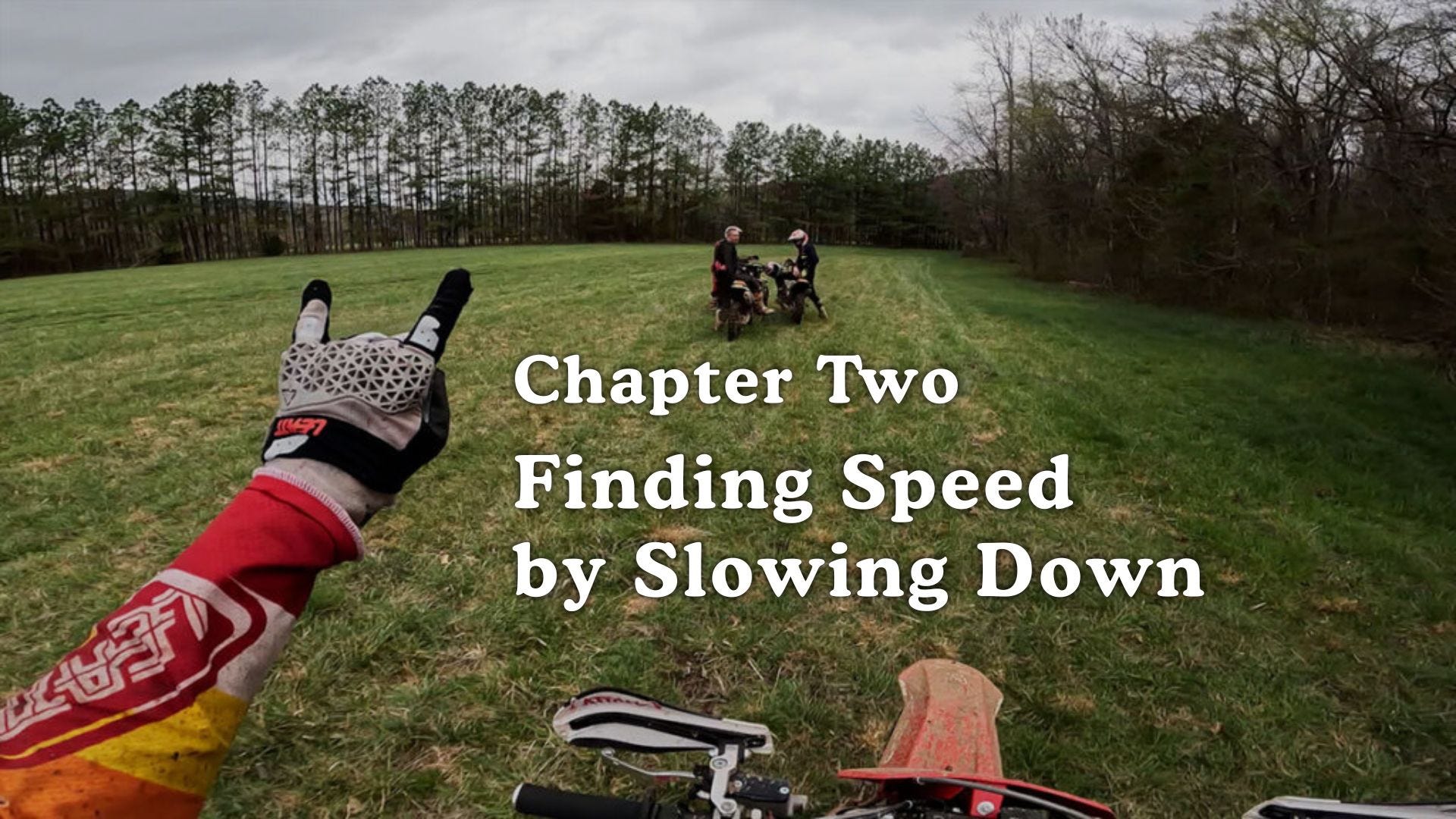
As it turns out, by attacking less, and staying smooth on the bike in test three, I finished 1st in the 40A class and 7th Overall. It’s weird to rewatch footage from this section, because it never looks like I am riding “fast”. I am controlled and calculated with how I read the terrain, and with how I rode it. It was a very technical fresh cut trail, with extremely steep, slick hills to descend and climb. As well as tight sections that slithered through rocky, rooty creeks that could take out a misplaced wheel at any moment.
There are going to be times in life where we have to go full throttle, giving 100% effort, but 100% effort isn’t maintainable for long durations. From a sport perspective, 100% effort is a sprint, and sprinters are done in under 15 seconds. From a life perspective, I believe we try to push ourselves at 100% effort past a maintainable pace. This is why we see more autoimmune diseases, more anxiety/depression, and more people feeling unsatisfied in the life they’re living. Are we truly living our life if we’re constantly trying to sprint through it?
This immediately relates to the success I had in test three. Because I rode at 90-95% pace, I was able to respond to the obstacles in the trail. I had time to prepare and plan my pace and angles better, so I didn’t crash or get pin-balled off course. My heart rate was high, but it wasn’t pegged, so when I did need to react quickly, there was capacity left that I could tap into. Less is more, even on a dirt bike.
The rest of the day was what the entire day on the bike should have been, fun while challenging. I certainly found myself in a few predicaments, but by attacking a tad less, I kept myself off the ground and stopped beating myself up mentally from those costly mistakes.
When the race ended and the scores we tallied, I was 3rd in the 40A class and 16th Overall. Wes Parr, who was second in our 40A class, beat me by 12 seconds. If anything in the first two test sections had gone any different, I could have made those seconds up; but that’s why we race. As for first place in our class, Mitchell Moore, I was 7 minutes, 46.209 seconds behind him. Those first two test sections ruined any chance of winning our class on the day. As I started making adjustments after test two, I did win two of the six remaining tests on the day; also never finishing outside the top three. That tells me I was competitive, and with more preparation and race smarts, there’s the possibility I could have beaten Moore.
As I said early though, that is why we race. We compete on the day and the course that is set in front of us to see who comes out on top. If we don’t win, or don’t perform as we believe we can, that gives us the opportunity to assess why we lost and work on those weaknesses. Which is exactly what I started doing before I drove 18 hours to the ISDE Qualifier in West Virginia. You read that right, in the next chapter I’ll take you to the High Voltage US Sprint Enduro two-day event as I try to earn a spot to race for the United States on the Senior Club Team.
For now though, Liam and I loaded up the motovan and started our drive back home. I began the process of realizing that my current weight of 165 pounds, and lack of upper body strength, was a problem. I knew the way I was training was going to need to change, because I needed to have more physical capacity for the bike I was riding if I wanted to continue to improve as a racer. The work we did after Sumter was an improvement, but it wasn’t the end of the growth I needed to find through the year.
Takeaways
Simple Objects and Memory
The narrow metal bridge at the White Rock Enduro and a white and blue coffee cup I have from a family trip to Georgia are eerily similar; they both help me store memories from emotional moments in my life. The White Rock Enduro is memorable because of the struggle on the day, and the ways I overcame adversity to turn the day around. Every time I use the white and blue coffee cup from our family trip to Georgia, I vividly remember the family moments I know I’ll carry with me for the rest of my life.
I hope you have simple objects in your life that bring memories and emotion to the front of your mind. That they give you a chance to relive moments that remind you how amazing life is and how worth it it is to get out there and feel alive. If you don’t have those simple objects, it’s time to go find some.
I can’t say that without recognizing that simple objects can go the other way, reminding you of things you wish you didn’t remember. From what I have learned, you never forget, you learn to manage. You don’t forget those moments, you learn to work through them.
Always try new things, unless it’s race weekend
As a nutrition coach, I remind myself and athletes all the time to not try new things on race weekends. Stick to what you know, so you have confidence and understand how your body will respond and function. It’s wild to me that I ran a new rear tire at White Rock, because it’s the exact same issue. That’s how easy it is to forget good information when you move from one area of your life to another.
As humans, we should challenge ourselves to learn and try new things. I have found great joy in being a beginner again; it keeps me humble. For whatever reason, we stay too comfortable in a routine that keeps us stuck. So unless it’s race weekend, or a time where you know you need to be at your best, try new things. Don’t allow the fear of new and different keep you from growing and learning.
We can’t sprint through our lives
It’s weird to think that most of us are trying to push ourselves at 100% through our daily lives. The only time we allow ourselves a chance to rest and relax, we go into a weekend full of drinks and late nights, never allowing our bodies and minds to come down from the week. This isn’t sustainable, and I believe it’s part of why we see more diagnoses of disease, more mental health issues, and more discontent with life in general.
I challenge you to take stock of what a week and a month look like for you. From there, you’ll be able to see if you’re trying to sprint through your days, or if you’re creating true down time. It wasn’t until I was diagnosed with an autoimmune disease in 2021, Psoriatic Arthritis, that I realized all I was doing was hammering myself into the ground. Even though I rode and trained a lot, I ignored the signs that were telling me my body wasn’t ok. It took that diagnosis to put the brakes on me, and my life, so that I could rebuild myself.
Thanks for making it this far.
Please leave your thoughts, ideas, reflections or critiques below as a comment.
Maybe the title should be Finding Success by Slowing Down?
If you found your way to Chapter Two and missed the Introduction and Chapter One, please give them a read as well.
If you’re not subscribed to Purveyor of Awesome, please do so. There will be future chapters to get your feedback on, as well as other writings of mine as they bubble to the surface.