
For Episode #004 of Deepish Conversations, I sat down with Denise Hatch to talk about pressure, focus, confidence, and the practices that help us show up when the moment gets big.
Denise is a mindset coach who works with athletes in motocross, off-road racing, and other high-performance environments. These ideas apply to racing, to a difficult meeting, a hard conversation, or any moment when you know what you are capable of but cannot quite access it.
We talk about breath, visualization, self-talk, and the value of having a process to return to when pressure starts pulling your attention toward everything you cannot control.
The question underneath it all is simple:
What do we do when the pressure rises and our mind starts working against us?
Watch/listen to Episode #004 here:
Pressure Is Not the Problem
Pressure is part of doing things that matter. It shows up on the starting line, in an important meeting, during a difficult conversation, or when we are trying to do something that feels just outside of what we have done before.
Most of the time, pressure gets harder when our attention runs too far ahead of us. We start thinking about the outcome, what other people expect, what might go wrong, or how we compare to the person beside us. Before long, we are stuck trying to control things that were never fully ours to control in the first place.
For a racer, it might be lining up and thinking, “I have to get the holeshot.” The problem is that there are other riders on the line, changing conditions, and a lot of things that can happen before the first corner. What is available in that moment is the process. Where your attention is, what your breathing is doing, what the bike feels like, and what you need to do next.
Denise kept returning to breath as the first place to start. When pressure rises, breathing often becomes shallow, fast, or erratic, and the mind gets busier right alongside it. A deep, even, steady breath does not remove pressure or guarantee an outcome, but it can bring us back to the present moment and the process we have already practiced.
For an athlete, that might mean returning to a start-line routine. For someone in a meeting, it might mean taking one breath before responding to something difficult. The pressure may still be there, but the pause can keep it from making every decision for us.
Awareness Creates the Chance to Change
Denise talks about awareness, alignment, and action. Before we can change a pattern, we have to be honest about the pattern we are running.
When pressure rises, where does your mind go? Is it fear, self-criticism, a need to prove something, or a familiar reaction that gives short-term relief but keeps pulling you away from the life you are trying to build?
A lot of these patterns are so familiar that we barely see them anymore. The same thoughts, reactions, and habits become automatic, and we do not stop long enough to ask whether they are actually helping us get where we want to go. Awareness is not about getting mad at yourself for having a thought. It is about recognizing the thought before it gets to decide the next move.
Alignment is getting the deeper, automatic part of ourselves working with where we want to go rather than against it. Once we have some awareness of what we are doing, we can ask a more useful question. Where do I want my attention to go instead?
That does not mean we will always get it right in the moment. It means we have spent enough time thinking about the response we want that we are less likely to be surprised by ourselves when the pressure arrives. The more we practice bringing attention back to something useful, whether that is our breath, a routine, or the next action in front of us, the more available that response becomes.
Confidence Comes From the Work
Confidence is often treated like something you either have or do not have, but Denise’s perspective is more useful than that. Confidence can come from having a process, doing the preparation, and showing up even when you are still nervous.
Instead of saying, “I’m nervous,” Denise talked about learning to say, “I’m ready.” That does not mean pretending we are not feeling something. Nerves are often part of doing something meaningful. The goal is not to become flat, emotionless, or perfectly calm. It is to be ready and steady enough to use what we have prepared.
Visualization is part of that preparation. Denise talked about mentally rehearsing a process before the event, whether that is a racer imagining the start procedure and first corner, someone walking through the opening of a presentation, or simply preparing for a conversation they have been avoiding. The work done before the moment matters because it gives us something familiar to return to when the moment becomes unfamiliar.
The work after a result matters too. When a race, project, workout, or conversation does not go how we wanted, it is easy to jump straight to, “That sucked,” or “I blew it.” Denise offered a better way to look at it. Ask what could have been better, what went well, and what you will implement next time.
That does not remove disappointment, and it does not mean every outcome is good. It gives us a way to learn without turning one bad result into a permanent verdict about who we are.
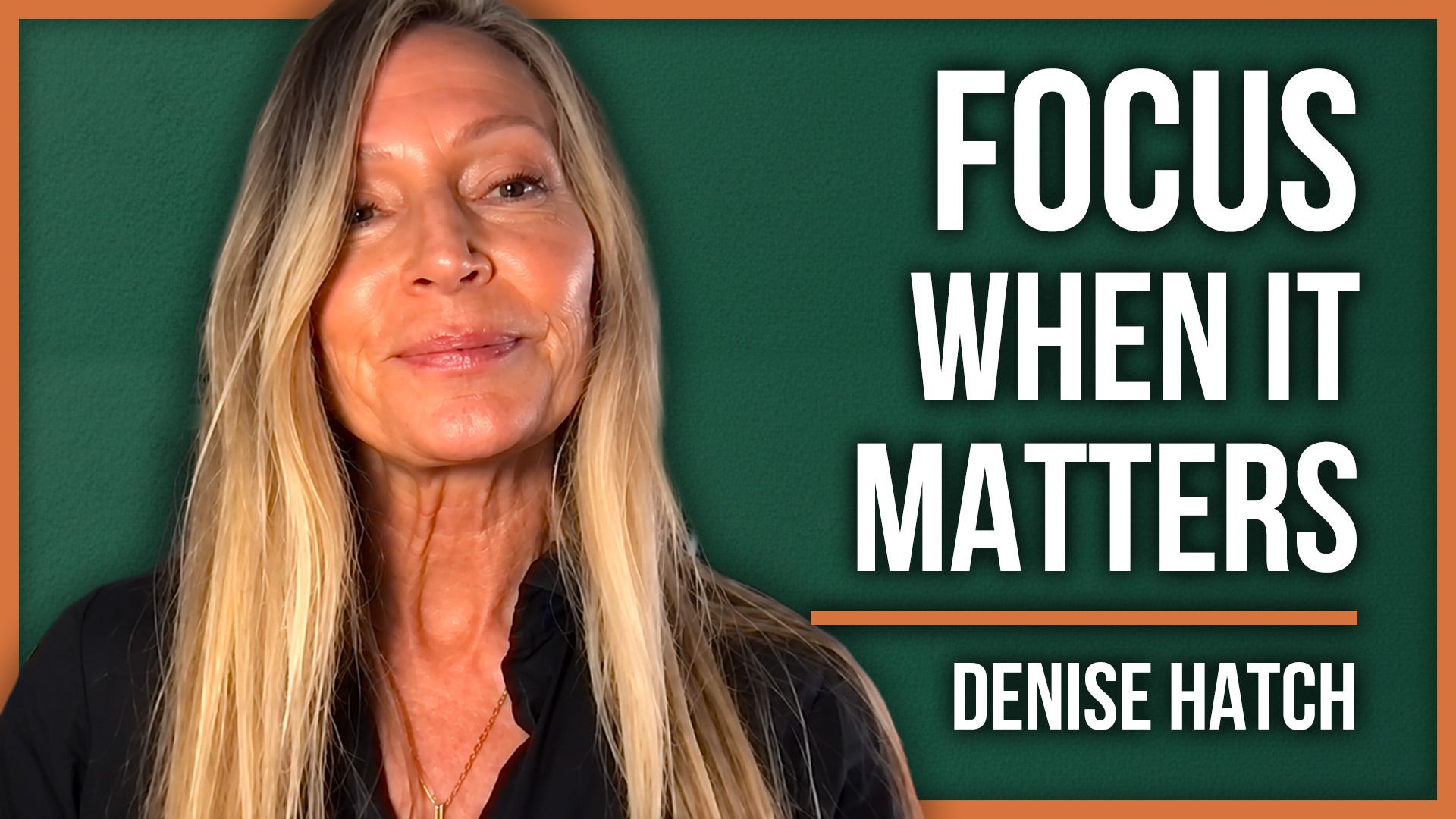
You have to be aware, and you have to be willing to be aware, of the patterns you’re currently running, the thoughts you’re currently having, the ways in which you react, not respond, but react, to your pressure or your stress in your life. And that’s where we begin.
Thanks for Reading/Listening
Pressure, nerves, and disappointing outcomes are not going away. What can change is the way we meet them.
If we can build a little more awareness, practice a response before we need it, and trust ourselves enough to learn from the result, we have a better chance of staying present when the moment gets big.
If you enjoyed this episode or article, please share it with an athlete, training partner, parent, coworker, or friend who may need the reminder that pressure does not have to take over.